Facelift · Face & Neck · Colombia
Facelift in Colombia: reposition, don't pull
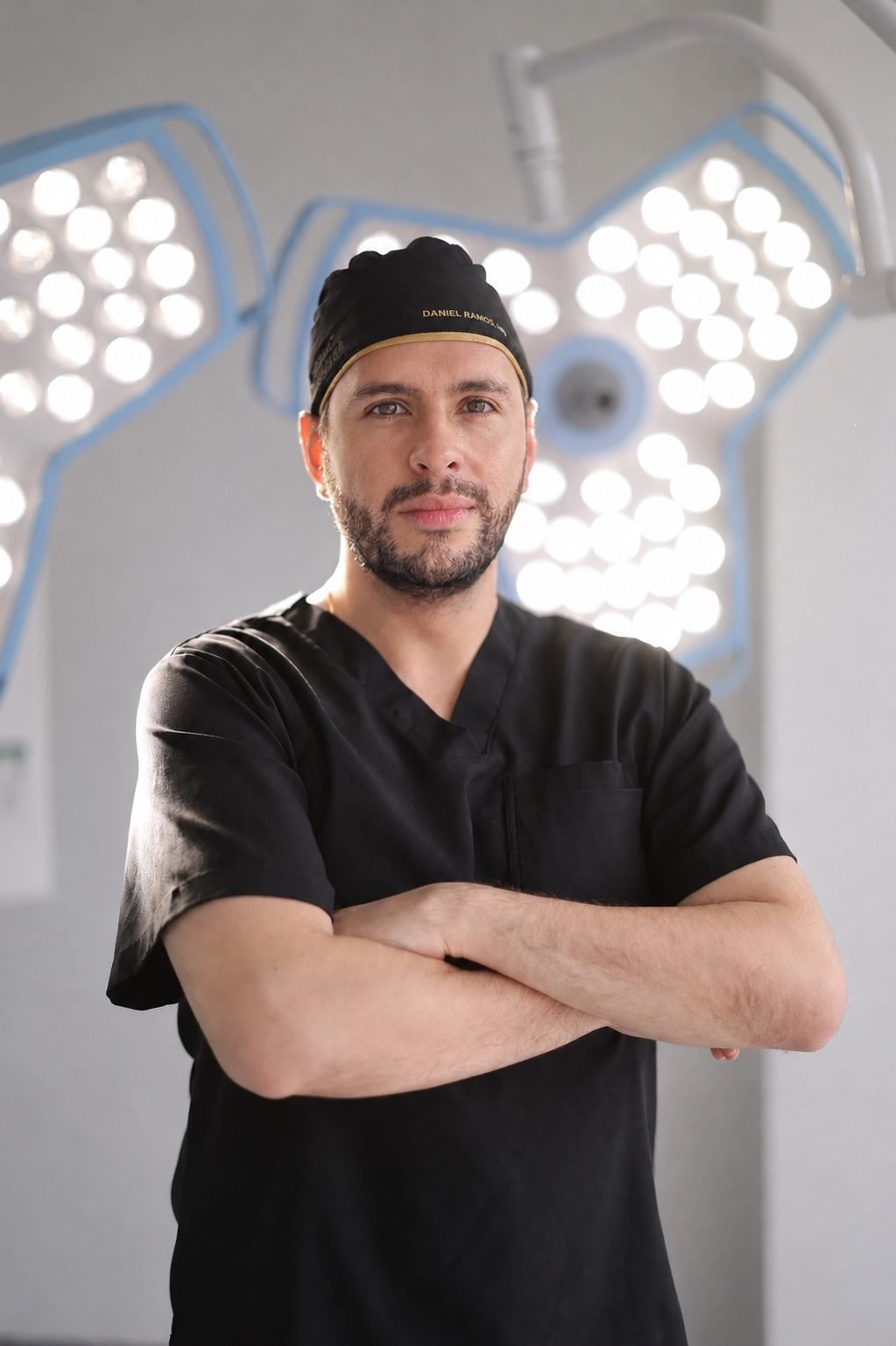
A face does not age because it has excess skin: it ages because the deep tissue descends. A facelift that pulls skin announces itself; one that puts the SMAS back where it belongs does not. By Dr. Daniel Ramos, SCCP board-certified plastic surgeon trained in facial reconstruction.
What a facelift is — putting tissue back
A facelift — rhytidectomy — corrects laxity in the lower third of the face and the neck. The popular idea is that it stretches skin; modern surgery does something else. Beneath the skin lies a layer called the SMAS, the superficial musculoaponeurotic system, and it is what holds the fat and tissue of the face in place. Over the years it loosens and the whole assembly descends: the cheek drops, the nasolabial fold deepens, the jawline blurs and the jowl appears. A facelift works on that layer, moves the tissue back up, and only then redrapes the skin — without tension. The skin is the consequence, not the objective. That is why a good facelift does not read as surgery: nothing is being pulled.
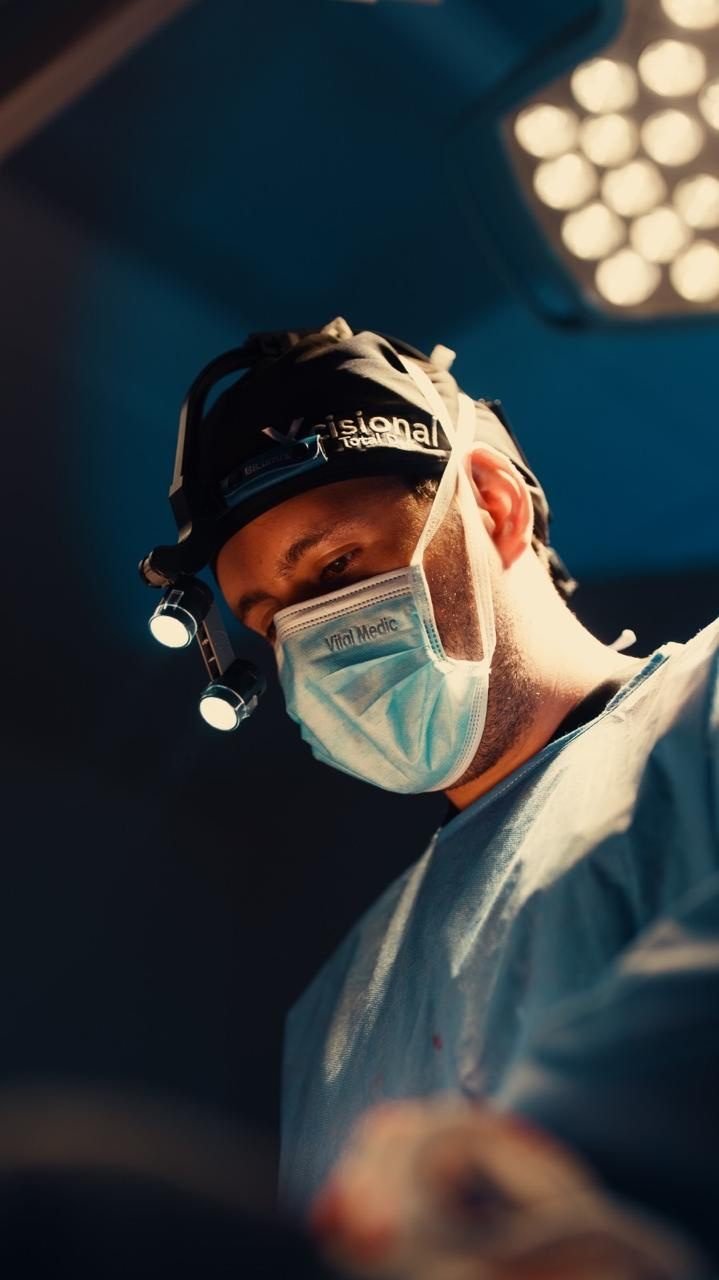
Pulling skin or repositioning the SMAS
Both operations are called a facelift. One lasts a short time and shows; the other lasts years and goes unnoticed.
- The skin is elevated and tightened, leaving untouched the layer that actually supports the face.
- Tension lands on the scar: it widens and becomes visible.
- The result fades quickly, because the deep tissue is still descended.
- It produces the pulled look, with the corner of the mouth displaced, that everyone recognises.
- The SMAS is addressed — plication, resection or deep-plane release — and the tissue travels back upward.
- Skin is redraped without tension, so the scar closes fine.
- The result holds over time because it corrects the cause, not the symptom.
- It reads as rested, not operated: the features are still yours.
And one honest clarification: no facelift improves skin quality. Fine lip lines, pigmentation and sun damage need a different treatment. If what you lost is volume, fat grafting is added in the same operation. It is worth knowing which problem each thing solves before booking surgery.
What gets done, case by case
Cervicofacial lift
Face and neck in one operation: SMAS repositioned, jawline redefined, jowls and platysma bands addressed.
Deep plane
The SMAS is fully released and the unit is mobilised as one. Indicated when midface descent is significant; more demanding, with higher reported satisfaction and also more complications.
Mini lift and neck contouring
For early laxity of the lower third, with shorter incisions. When the issue is only cervical fat, submental liposuction can be enough without a lift.
What the studies say about risk and technique
The facelift is the most studied operation in facial surgery. These are the three findings that should weigh most on your decision — and that rarely come up in consultation.
A series of more than eleven thousand facelifts: 1.8% overall complications and 1.1% hematomas. Hematoma risk was nearly four times higher in men, and combining procedures raised complications from 1.5% to 3.7%.
Gupta V, et al. Aesthet Surg J. 2016;36(1):1-1321 studies and 2,896 patients comparing deep plane with SMAS: satisfaction of 94.4% versus 87.8%, with more complications in the deep plane (17.2% versus 10.3%). Both deliver durable results.
Khoury S, et al. Aesthet Plast Surg. 2025;49:5895-5903Hematoma is the most frequent complication and appears mostly in the first 48 hours. Strict perioperative blood-pressure control and stopping nicotine weeks beforehand are the two measures that reduce it most — and they depend on you as much as on the surgeon.
Perioperative protocol of the practiceNone of this is meant to frighten you: it is so you go into surgery knowing what is being watched, why you are asked to stop smoking, and why two stages is sometimes the better plan.
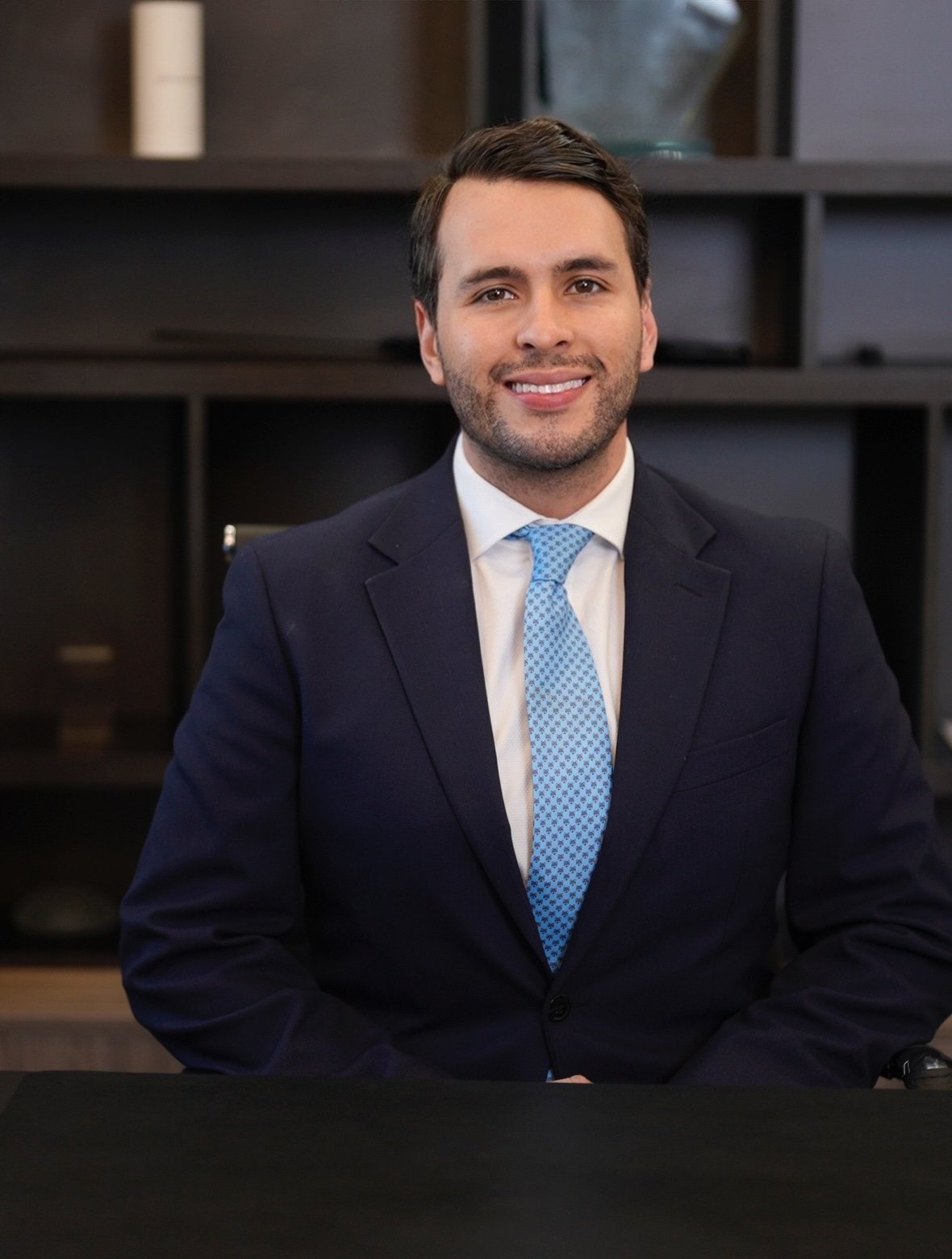
Facial anatomy learned in reconstruction
Dr. Daniel Ramos Hernández is board-certified by the Colombian Society of Plastic Surgery (SCCP) and trained in Plastic, Reconstructive and Aesthetic Surgery at Universidad El Bosque in Bogotá. His work on the face did not begin with aesthetics: he holds a Minciencias grant for cleft lip and palate research with Operation Smile, authored Conociendo la fisura labiopalatina, and has published in The Cleft Palate-Craniofacial Journal. That school — anatomical planes, the facial nerve, tissue that has to keep working — is exactly what a facelift demands. See his full training record.
Colombian Society of Plastic Surgery
Minciencias grant · Operation Smile
Plastic, Reconstructive & Aesthetic Surgery
What we don't do in a facelift
- We don't pull on skin. Tension goes on the SMAS; skin is redraped without force. That is the difference between a fine scar and a wide one, and between a natural result and an operated face.
- We don't lift the face and ignore the neck. If the platysma bands have separated, tightening from the sides will not correct them. They are treated in the same operation or the result stays half-finished.
- We don't promise what a facelift doesn't give. It does not improve skin quality, does not erase fine lines or pigmentation, and does not restore volume on its own. Each of those has its own treatment, and you hear that beforehand.
- We don't operate on uncontrolled blood pressure or an active smoker. Those are the two factors that most increase hematoma and flap problems. If surgery has to be postponed to fix them, it is postponed.
Facelift recovery and what to expect
Typical ranges — your personalized surgical plan sets the exact details for your case.
What does a facelift cost in Colombia?
Facelift cost is never one number, because the same word covers everything from a mini lift of the lower third to a deep-plane cervicofacial lift with neck work. What we can tell you precisely is what it depends on — and what the real total of the trip looks like from the United States.
The consultation, in person or by video, is the only point from which a responsible number can be given, because the plan depends on how much real descent there is to correct.
Request my personalized quoteYour trip to Bogotá, step by step
- Video consultation from home. With Dr. Ramos, in English or Spanish, reviewing front, profile and neck photos and quoting your case before you book anything.
- 10–14 days in Bogotá. In-person consultation, labs, surgery, suture removal and a review before you fly. Bogotá is a three-to-five hour flight from most US hubs and sits at UTC−5 year-round.
- Recovery accommodation and logistics. Guidance on recovery housing and transfers, with a bilingual point of contact throughout your stay.
- Follow-up through the first year. Video reviews once you are home, until the scars have fully matured.
Facial contouring before and after, real results
A real facial contouring case operated on by Dr. Daniel Ramos in Bogotá.

This case is submental liposuction and facial contouring, not a facelift: we show it because it is our own, real material. Every patient is different, and results vary with anatomy, skin and recovery.
Everything about a facelift in Colombia
It depends on how extensive the operation is. A full cervicofacial lift, a deep plane lift and a mini lift of the lower third are not the same surgery or the same operating time, and the neck — when it has to be treated — changes the plan. Combining it with eyelid surgery or fat grafting, which is common, changes it too. In the United States a facelift commonly runs well into five figures once facility and anesthesia are counted; in Bogotá the full surgical package is a fraction of that, with board-certified surgeons and accredited facilities. After your consultation Dr. Ramos issues an all-inclusive quote — surgical fee, facility, anesthesia, supplies and first-year follow-up — and for the real total of the trip you add flights and ten to fourteen days of accommodation.
It does one very specific thing: it repositions tissue that has descended. It restores the facial oval, corrects laxity in the lower third, redefines the jawline and treats the neck. What it does not do is change the quality of your skin: it does not erase fine lines around the mouth, does not lighten sun damage or pigmentation, and does not replace lost volume — for that, fat grafting is added in the same operation. A facelift done to 'remove wrinkles' by pulling skin is exactly the one that looks operated; the one that puts tissue back where it belongs is the one nobody notices.
The SMAS is the layer beneath the skin that supports the face. In SMAS techniques that layer is plicated or resected to tighten it; in the deep plane it is fully released so that skin, fat and SMAS move upward as a single unit, which lets the cheek fat be repositioned without tension on the skin. The most recent meta-analysis reports higher patient satisfaction with the deep plane and, at the same time, a higher complication rate than SMAS. Neither is 'the best' for everyone: the choice follows your anatomy, your neck and how much real descent there is to correct.
They are almost always part of the same problem. When the neck has fat and the skin still retracts well, submental liposuction may be enough. When the platysma muscles have separated in the midline — the two vertical bands that show when you speak — tightening from the sides will not fix them: they need plication through a small incision under the chin. Operating the face and leaving the neck untreated is the most common reason a result looks unfinished.
It is more demanding than a minor facial procedure and worth planning for. The first 48 hours are managed with a dressing, head elevation and strict blood-pressure control, because most hematomas appear in that window. Sutures come out between day seven and day ten, and by week two or three most patients are back to social life with makeup. Swelling drops visibly at a month, but the face keeps settling: scars finish maturing between six and twelve months. Numbness in front of the ear is normal for weeks. Plan on ten to fourteen days in Bogotá before flying home, with follow-up by video afterwards.
On average a well-executed facelift gives back eight to twelve years, and the clock restarts from where you were — it does not stop ageing. Your face keeps changing: at ten years you will still look better than if you had never had surgery, but older than the day after it. What extends the result is not the technique: it is not smoking, protecting your skin from the sun, keeping a stable weight and treating skin quality with a medical plan.
The incisions follow the contour of the ear, tuck into the tragus and hide in the hairline; when the neck is treated, a short incision is added under the chin. Well designed and closed without tension, they are hard to find at six months even close up. The single thing that ruins a facelift scar is tension on the skin — which is why the real work happens in the SMAS — and the second is sun exposure in the first months.
It is major day-surgery, and in the hands of a board-certified plastic surgeon in an accredited facility the complication rates are low: a series of more than eleven thousand facelifts reported 1.8% overall complications and 1.1% hematomas. Three things do raise the risk and are assessed beforehand: being male — the hematoma risk is several times higher — poorly controlled blood pressure, and combining several procedures in one operation. Nicotine compromises flap healing, so it is stopped weeks in advance. If your case calls for two stages, it is done in two stages.
Let's talk about your face
Tell us what bothers you in the mirror and we'll come back with an honest, personalized plan. In-person consultations in Bogotá and video consultations worldwide, in English and Spanish.