Blepharoplasty · Upper & Lower Eyelids · Colombia
Eyelid surgery in Colombia: the rested look you already had
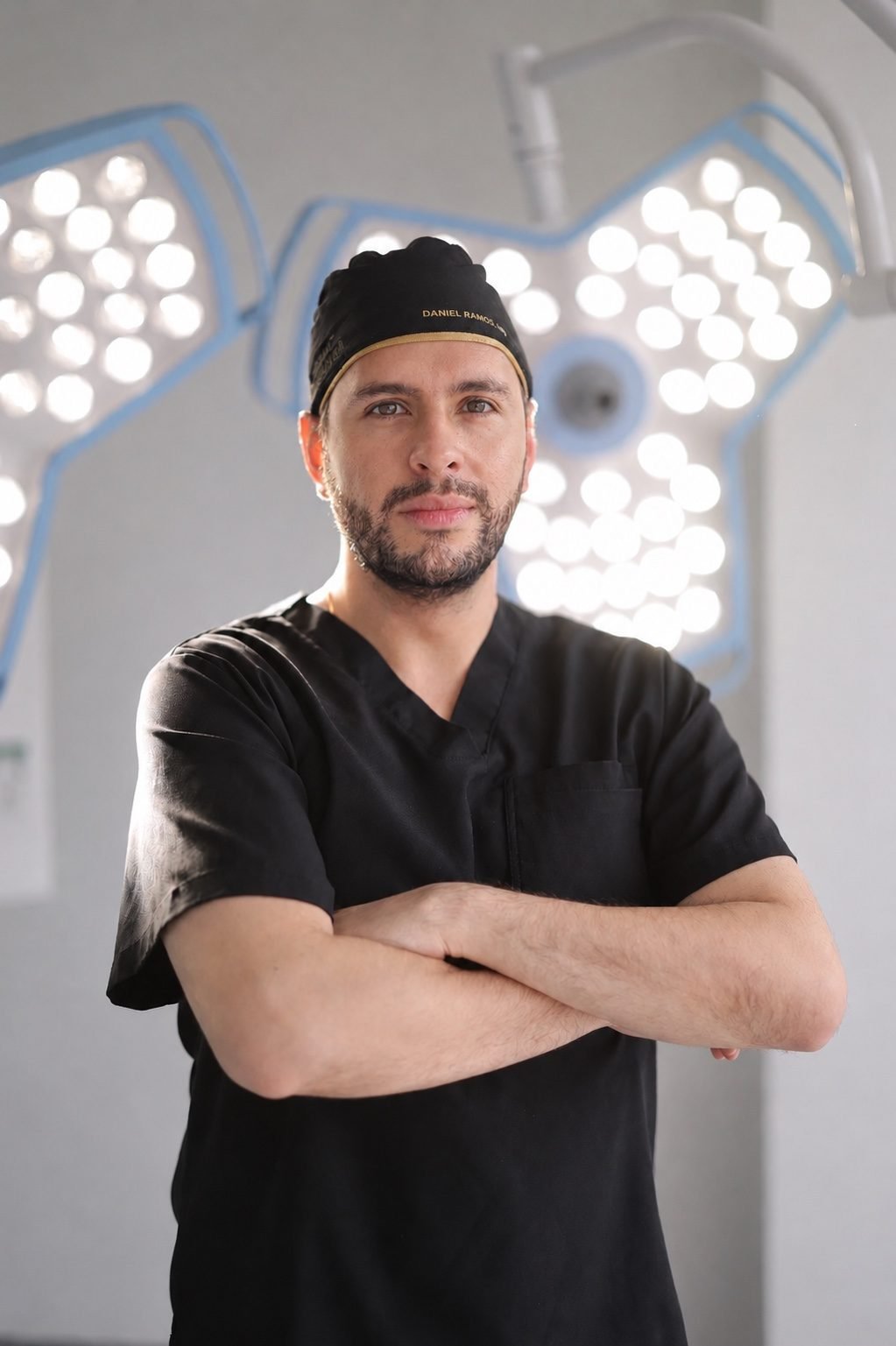
Good eyelid surgery doesn't read as surgery — it reads as sleep. The principle is preservation: fat repositioned rather than emptied, and only the skin that truly spares removed. By Dr. Daniel Ramos, SCCP board-certified plastic surgeon trained in facial reconstruction.
What blepharoplasty is — rest the gaze, don't change it
Blepharoplasty corrects excess skin in the upper eyelid and the bags in the lower one. They are two different problems with one underlying cause: over the years eyelid skin loses elasticity and the septum holding the fat around the eye weakens, so that fat pushes forward. Above, the result is a crease that drapes and, in marked cases, rests on the lashes; below, the bags and the dark groove between lid and cheek. No cream corrects a bag, because a bag is not skin — it is fat that has moved. And surgery does not change the shape of your eye: it removes what is in excess and puts the fat back where it belongs.
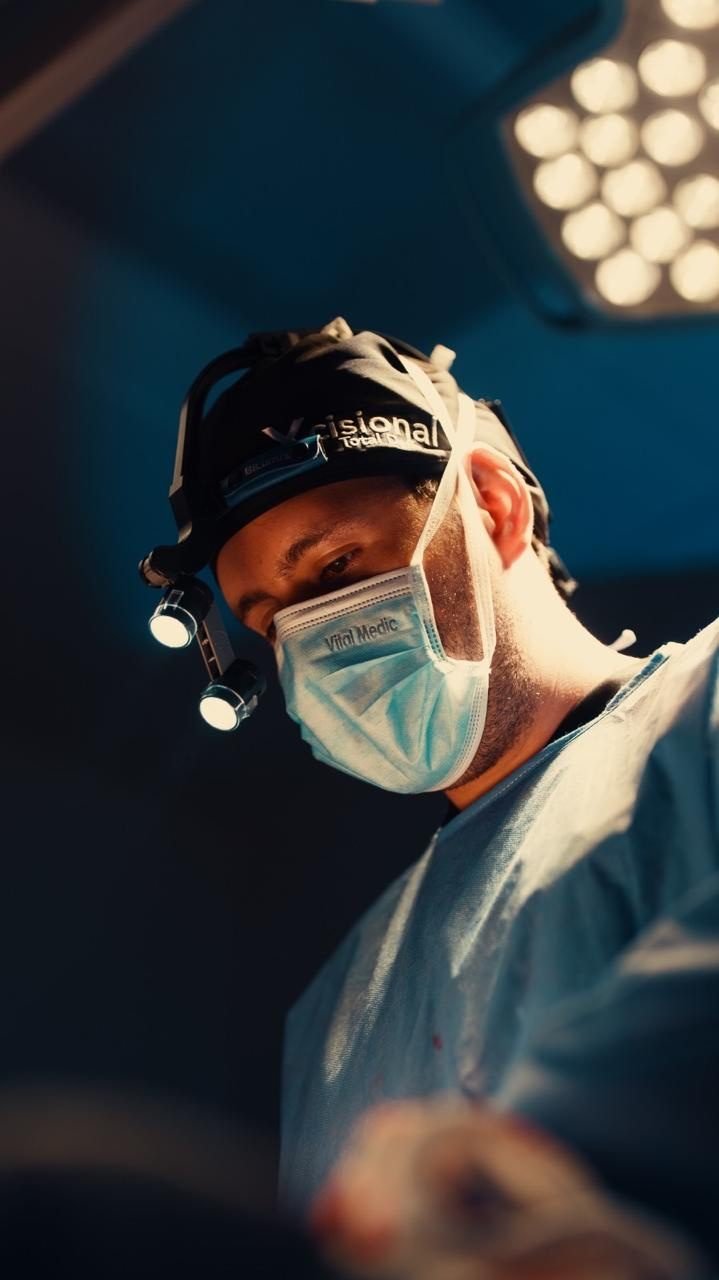
Hollow the eyelid or preserve it
Both operations carry the same name. One leaves a rested face; the other leaves a hollow one that announces the surgery.
- Every millimetre of skin that appears to spare is taken, with no margin left for lid closure.
- Lower-lid fat is excised entirely, and the hollow under the eye deepens with the years.
- The lower lid is always approached from outside, even when there is no skin to remove.
- Lid laxity goes unassessed, and the margin can end up retracted.
- Skin is marked with you seated and removed in measure, always leaving complete lid closure.
- Fat is repositioned over the tear trough instead of excised — filling the groove rather than emptying the area.
- Transconjunctival approach — inside the lid, no external scar — when bags are the only issue.
- If the lid is lax, the lateral canthus is supported in the same operation.
None of this is aesthetic preference — it is anatomy. The eyelid is under a millimetre thick, and it is the one place in the body where taking two millimetres of skin too many is paid for with an eye that doesn't close properly at night. The skill of the operation is in what gets left behind.
Three operations under one name
Upper blepharoplasty
Removes excess skin — and, where it spares, a minimal strip of muscle and fat — through an incision hidden in the crease. Usually done under local anesthesia with sedation, and it is the one that most changes a tired expression.
Lower blepharoplasty
Transconjunctival when skin is not in excess: no external scar, with fat repositioned over the tear trough. Subciliary, under the lash line, when skin must come out as well.
Ptosis and brow
If the lid margin sits low because the levator has lost strength, or if what is falling is the brow, the indicated operation is a different one. You hear that at the consultation, not afterwards.
What the studies say about the real risks
Blepharoplasty has a reputation as minor surgery. It is safe and same-day, but it carries common complaints almost nobody mentions beforehand. We would rather you read them here.
In a series of 892 blepharoplasties, 26.5% of patients reported dry eye symptoms and 26.3% chemosis. Risk was higher when upper and lower lids were operated in the same session, with canthopexy, and in patients with prior dry eye or lid laxity.
Prischmann J, et al. JAMA Facial Plast Surg. 2013;15(1):39-46The transconjunctival route is indicated for fat bags without excess skin; the subciliary one when skin and muscle must be removed. Across the reviewed series, ectropion appears in roughly 0.4% — uncommon, and choosing the right approach is what keeps it there.
Overview of Surgical Approaches for Lower Eyelid Blepharoplasty. Aesthet Surg J. 2023;43(12):1429-1440Ophthalmology's functional-indication guidance separates dermatochalasis — skin in excess — from ptosis, a problem of the levator muscle. Confusing the two is the most common reason a technically clean result still disappoints the patient.
Functional Indications for Upper Eyelid Ptosis and Blepharoplasty Surgery. Ophthalmology, 2011None of this rules the surgery out. It argues for a careful assessment, an honest briefing on what to expect, and — in some cases — two stages instead of one.
Facial anatomy learned in reconstruction
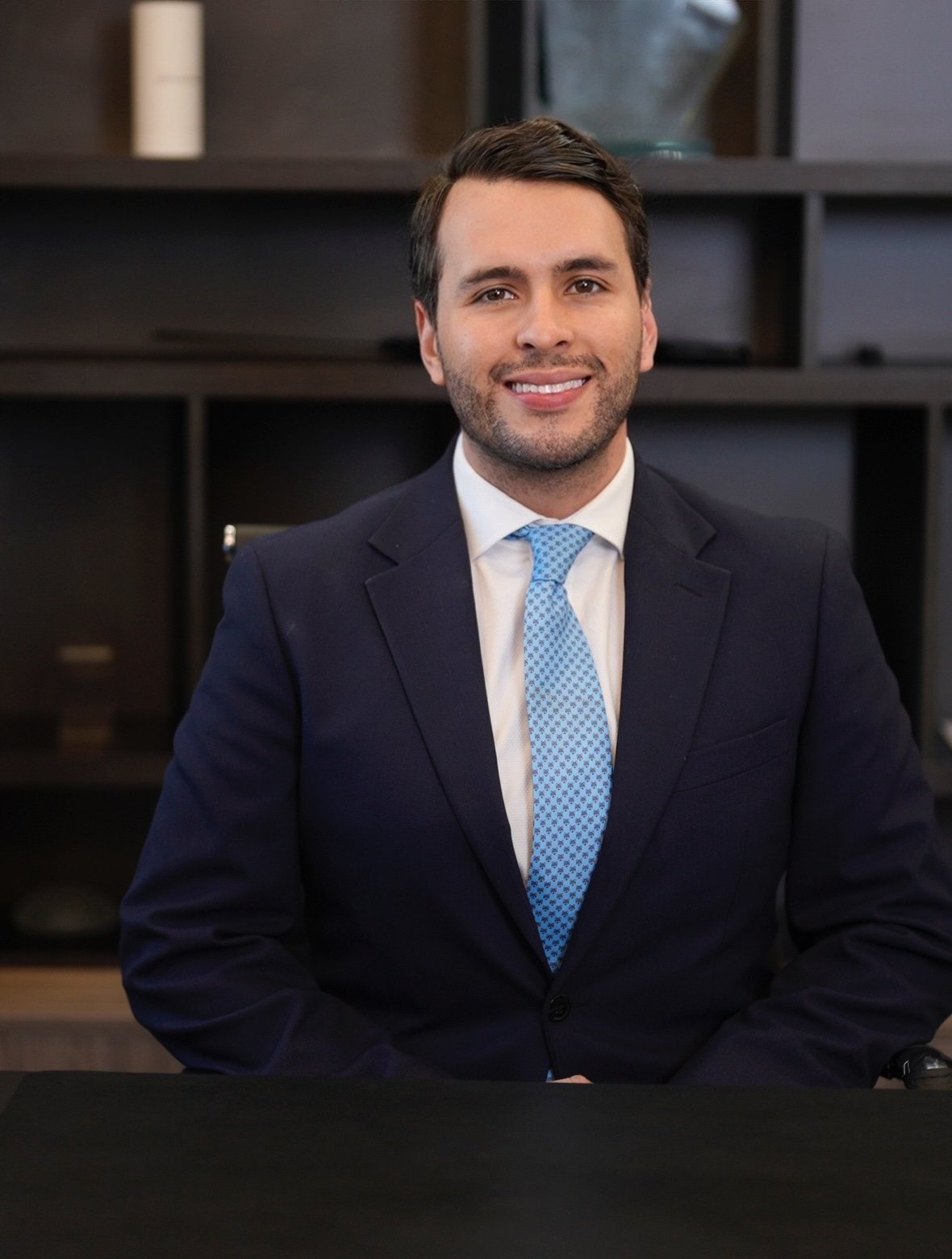
Dr. Daniel Ramos Hernández is board-certified by the Colombian Society of Plastic Surgery (SCCP) and trained in Plastic, Reconstructive and Aesthetic Surgery at Universidad El Bosque in Bogotá. His work on the face did not begin with aesthetics: he holds a Minciencias research grant for cleft lip and palate research alongside Operation Smile, authored Conociendo la fisura labiopalatina, and has published in The Cleft Palate-Craniofacial Journal. That school — rebuilding fine facial structures where a millimetre changes function — is what sets his approach to the eyelid: take only what spares, preserve what supports, and never chase a result that announces itself.
Colombian Society of Plastic Surgery
Minciencias grant · Operation Smile
Plastic, Reconstructive & Aesthetic Surgery
What we don't do in eyelid surgery
- We don't take every millimetre that looks spare. The lid has to close completely when you sleep. Skin is marked with you seated, with margin, because a generous resection looks good on the table and is paid for with months of burning and dryness.
- We don't hollow the lower lid. Fat is repositioned over the tear trough whenever it can be. Removing it outright leaves a hollow that, five years on, ages the face more than the bags it replaced.
- We don't treat a ptosis as loose skin. If the levator has lost strength, removing skin will not raise the lid. It is measured at the consultation and explained to you, even when it changes the plan you arrived with.
- We don't promise what this operation doesn't do. Blepharoplasty does not erase crow's feet, does not lighten pigmented dark circles and does not lift the brow. If that is what bothers you, you hear it before surgery, not after.
Blepharoplasty recovery and what to expect
Typical ranges — your personalized surgical plan sets the exact details for your case.
What does eyelid surgery cost in Colombia?
Blepharoplasty cost is never one number, because the same name covers very different operations: an isolated upper lid under local anesthesia is not the four-lid operation with fat repositioning and canthal support. What we can tell you precisely is what it depends on — and what the real total of the trip looks like from the United States.
Eyelid surgery travels well: it is same-day, the recovery is short and it combines easily with facial and neck contouring in the same trip. The consultation, in person or by video, is the only point from which a responsible number can be given.
Request my personalized quoteYour trip to Bogotá, step by step
- Video consultation from home. With Dr. Ramos, in English or Spanish, reviewing front and profile photos and quoting your case before you book anything.
- 7–10 days in Bogotá. In-person consultation, labs, surgery, suture removal and a review before you fly. Bogotá is a three-to-five hour flight from most US hubs and sits at UTC−5 year-round — the same clock as US Eastern in winter, one hour behind it in summer.
- Recovery accommodation and logistics. Guidance on recovery housing and transfers, with a bilingual point of contact throughout your stay.
- Follow-up through the first year. Video reviews with Dr. Ramos once you are home, until the scar has fully matured.
Blepharoplasty before and after, real results
Facial surgery cases documented by Dr. Daniel Ramos on Instagram.
For men considering eyelid rejuvenation, I fully recommend Dr. Daniel Ramos. His professionalism, attention to detail and genuine care make the difference. From the first consultation he inspires confidence and makes sure you feel comfortable at every stage.
The results are natural, subtle and designed to enhance your appearance while keeping your own features.
Everything about eyelid surgery in Colombia
It depends on whether you have the upper lids, the lower lids or all four done, on the anesthesia, and on the surgical facility. An isolated upper blepharoplasty under local anesthesia with sedation is the lower end; adding the lower lids, fat repositioning or canthal support changes the operating time and the number. In the United States, blepharoplasty commonly runs several thousand dollars for the surgeon's fee alone, before facility and anesthesia; in Bogotá the full surgical package is a fraction of that, with board-certified surgeons and accredited facilities. After your consultation Dr. Ramos gives you an all-inclusive quote — surgical fee, facility, anesthesia, supplies and first-year follow-up — and for the real total of the trip you add flights and seven to ten days of accommodation.
This is the question that decides the operation. In dermatochalasis the problem is skin: it is in excess, it drapes over the crease and in marked cases it rests on the lashes; removing the excess skin corrects it. In ptosis the problem is the muscle that lifts the lid — it has lost strength or its tendon has slipped — so the lid margin sits low and covers part of the iris. These are two different operations, and removing skin does not fix a ptosis; it only moves the problem. That is why the consultation starts by measuring levator function, not by pinching skin.
Yes, but not the way most people picture it. Bags are not skin and not retained fluid: they are the fat pads around the eye pushing forward as the septum that holds them weakens. No cream reaches them. In lower blepharoplasty, when there is no excess skin, the approach is from inside the lid — transconjunctival, no external scar — and in most cases the fat is repositioned over the tear trough rather than removed. Simply emptying the pocket leaves a hollow look that ages the face faster than the bag did.
No, and it is better to know that before surgery. Blepharoplasty treats the skin and fat of the eyelid; the expression lines at the outer corner come from the orbicularis muscle and are managed with botulinum toxin, not a scalpel. A heavy brow is not corrected by removing eyelid skin either — doing so can pull it lower. If what weighs on your gaze is the brow, the right operation is a brow lift, and Dr. Ramos will tell you so at the consultation even if you arrived asking for something else.
Easier than most people fear, and more visible than they expect. The first two days are managed with cold compresses and head elevation; swelling peaks between 48 and 72 hours. Upper-lid sutures come out between day five and day seven, and most patients are back to desk work between day seven and day ten, once bruising can be covered with makeup. Grittiness or dryness is common in the first weeks and is managed with lubricating drops. Plan on seven to ten days in Bogotá: sutures out and a review before you fly, with follow-up by video afterwards. The crease scar finishes fading between three and six months.
In the upper eyelid the incision is hidden inside the natural crease: with the eye open it is not visible, and within months it becomes a pale line that is hard to find even with the eye closed. In the lower eyelid, when the approach is transconjunctival — from inside the lid — there is no external scar at all. When skin does need to be removed, the incision sits just under the lash line. Final scar quality is partly on you: keeping it out of the sun for the first months is half the result, which matters if you are flying home to somewhere sunny.
The skin that is removed does not come back, but the eyelid keeps ageing with the rest of the face. In practice a well-indicated upper blepharoplasty tends to hold for ten to fifteen years, and many patients never need a second operation. Results last longer in people who protect their skin from the sun, don't smoke and keep a stable weight. What doesn't change is eyelid genetics: if your family develops bags early, plan for maintenance rather than being surprised by it.
It is when you hold the surgeon and the facility to the standards you would at home. Dr. Ramos is board-certified by the Colombian Society of Plastic Surgery (SCCP), and surgery is performed in accredited facilities in Bogotá with a certified anesthesiologist and complete pre-operative labs. Three things are assessed before scheduling, because each one changes the plan: levator function, so ptosis is not treated as loose skin; lower-lid laxity, since a lax lid may need canthal support to avoid retraction; and any history of dry eye, refractive surgery or contact lens use. Transient ocular dryness is the most common complaint after this operation and is more likely when all four lids are done at once — which is why two stages is sometimes the better plan.
Let's talk about your eyes
Tell us what bothers you in the mirror and we'll come back with an honest, personalized plan. In-person consultations in Bogotá and video consultations worldwide, in English and Spanish.