Breast Augmentation · Preservé & Mia · Colombia
Breast augmentation in Colombia: volume that respects your tissue
The right implant is not the biggest one in the catalogue: it is the one your skin, your tissue and your chest can carry for years. Measurement-based planning and tissue-preserving Preservé and Mia techniques — by Dr. Daniel Ramos, SCCP board-certified plastic surgeon in Bogotá.
What breast augmentation is — proportion before volume
Breast augmentation increases breast volume and improves shape with a silicone implant, placed through a short incision — almost always in the breast fold, where the scar is hidden — into a pocket in front of or behind the pectoral muscle. It is the most common breast operation, and the one most often decided by the wrong number. Many patients arrive asking for cc; the result is determined by other measurements: the width of your breast base, the thickness of the tissue that will cover the implant, the elasticity of your skin and the shape of your chest. An implant that exceeds what your tissue can cover looks artificial from day one and shifts over the years. That is why planning starts with a tape measure, not a catalogue.
Preservation breast augmentation: Preservé and Mia
Both approaches place an implant. Only one is designed to disturb as little as possible of what you already have.
- The pocket is dissected with electrocautery, cutting through tissue.
- A four-to-five-centimeter incision to introduce the implant.
- When placed under the muscle, the pectoral is partly released from its attachments.
- More pain and a slower recovery in submuscular planes.
- The pocket is opened by separating tissue, not cutting it: a channel separator and a gradually inflated balloon.
- Shorter incisions, around three centimeters.
- The pectoral muscle is left intact: the implant sits in front of it.
- Less surgical trauma and a faster return to daily life — which matters when you are recovering away from home.
Tissue preservation is not for everyone. It works best for small-to-moderate volume increases, in patients with enough tissue to cover the implant and without significant sagging. When tissue is thin or a larger volume is the goal, dual plane augmentation is still the option that gives the most coverage. Choosing is not a matter of preference — it is a matter of measuring.
Three paths, depending on your anatomy
Mia
Minimally invasive augmentation for patients who want more volume without changing their silhouette. A short incision, the implant in front of the muscle and a recovery measured in days. For small-to-moderate increases.
Preservé
Tissue preservation through the breast fold. Keeps the muscle and the breast's own support structures intact. For primary augmentation, including when combined with a lift.
Dual plane
The upper portion of the implant sits behind the pectoral muscle. The choice when tissue is thin and the implant needs more coverage at the cleavage to stay invisible.
What the evidence says — and what it doesn't yet
Tissue-preserving techniques are recent. There is solid data at three years, not at ten. We would rather you read it here, with the sources, before you decide.
The paper that defined how to adjust the relationship between implant, muscle and gland by breast type. It is still the reference for deciding when an implant needs the coverage of the pectoral muscle.
Tebbetts JB. Plast Reconstr Surg. 2001;107(5):1255-1272A prospective study of 100 patients treated with a minimally invasive technique in front of the muscle: at three years, 3.2% overall complications, 1% reoperations and no cases of capsular contracture. Small-to-moderate volumes.
Chacon-Quiros M, et al. Aesthet Surg J. 2026;46(3):250-259Breast implants are not lifetime devices. For silicone implants, the FDA recommends ultrasound or MRI five to six years after surgery and every two to three years after that, even without symptoms.
FDA · Breast implant labeling recommendations, 2020None of this is meant to discourage you: it is what an informed patient should know before any breast surgery, with any surgeon, in any country.
Trained in reconstruction, operating to preserve tissue
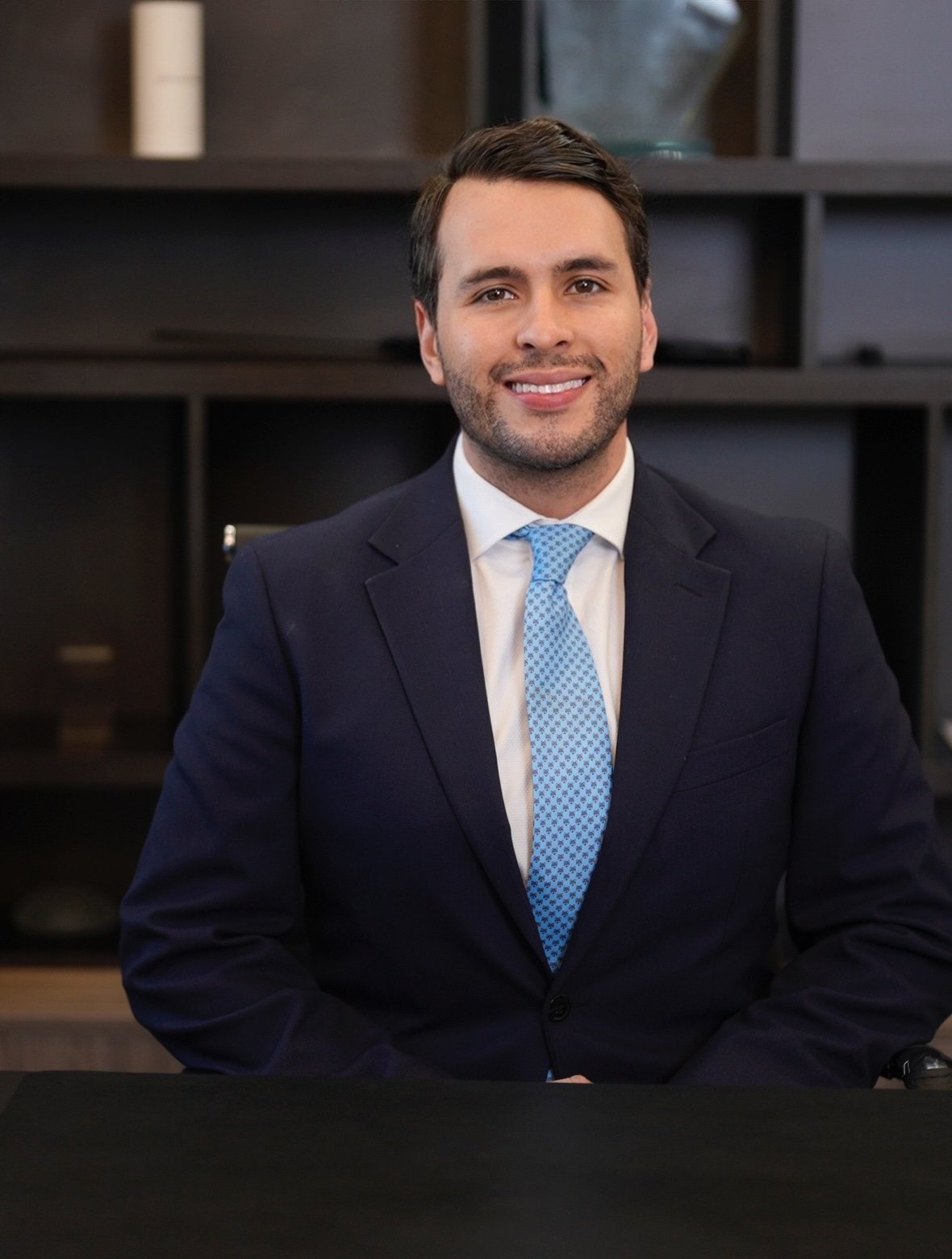
Dr. Daniel Ramos Hernández is board-certified by the Colombian Society of Plastic Surgery (SCCP) and trained in Plastic, Reconstructive and Aesthetic Surgery at Universidad El Bosque in Bogotá. His reconstructive background — including cleft lip and palate research with Operation Smile, funded by a Minciencias grant — is a school of respect for tissue: operating with what remains in mind, not only what is added. It is the same principle behind the Preservé and Mia techniques he uses in breast augmentation. And his Total Definer fellowship with Dr. Alfredo Hoyos adds something that matters when the breasts are planned alongside body contouring: reading the torso as one unit, in proportion with the waist and hips.
Colombian Society of Plastic Surgery
Plastic, Reconstructive & Aesthetic Surgery
Body contouring · Dr. Alfredo Hoyos
What we don't do in breast augmentation
- We don't choose implants from a catalogue. Volume follows your measurements — base width, tissue thickness, skin elasticity. If the size you have in mind exceeds what your tissue can cover, you will hear it, with the numbers in hand.
- We don't promise an implant will lift a sagging breast. If the nipple already sits below the fold, an implant only adds weight to a breast that has dropped. What you need then is a lift, with or without an implant — and you will know at the consultation.
- We don't tell you it's for life. Implants are not permanent devices. From the start we explain imaging follow-up and the possibility of a future exchange.
- We don't operate without imaging the breast first. Ultrasound or mammography according to your age and history, before surgery. An augmentation is also a chance to rule out anything that needs ruling out.
Breast augmentation recovery and what to expect
Typical ranges — your personalized surgical plan sets the exact details for your case.
What does breast augmentation cost in Colombia?
A minimally invasive augmentation, a dual plane augmentation with a larger implant and an augmentation with a lift are not the same operation, so they are not the same number. What we can tell you precisely is what it depends on — and what the real total of the trip looks like from the United States.
Bogotá offers board-certified surgeons, accredited facilities and implants from the same international manufacturers used in the United States, at a considerably lower total investment. The consultation, in person or by video, is the only point from which a responsible number can be given.
Request my personalized quoteYour trip to Bogotá, step by step
- Video consultation from home. With Dr. Ramos, in English or Spanish, reviewing photos and reference measurements and quoting your case before you book anything.
- 7–10 days in Bogotá. In-person consultation, breast imaging, surgery and a post-operative review before you fly. Bogotá is a three-to-five hour flight from most US hubs and sits at UTC−5 year-round — the same clock as US Eastern in winter, one hour behind it in summer.
- Recovery accommodation and logistics. Guidance on recovery housing and transfers, with a bilingual point of contact throughout your stay.
- Follow-up through the first year — and your implant card. Video reviews with Dr. Ramos once you are home, and the implant traceability card so your doctors there know exactly which device you carry.
Breast augmentation before and after, real results
A real case operated on by Dr. Daniel Ramos in Bogotá.
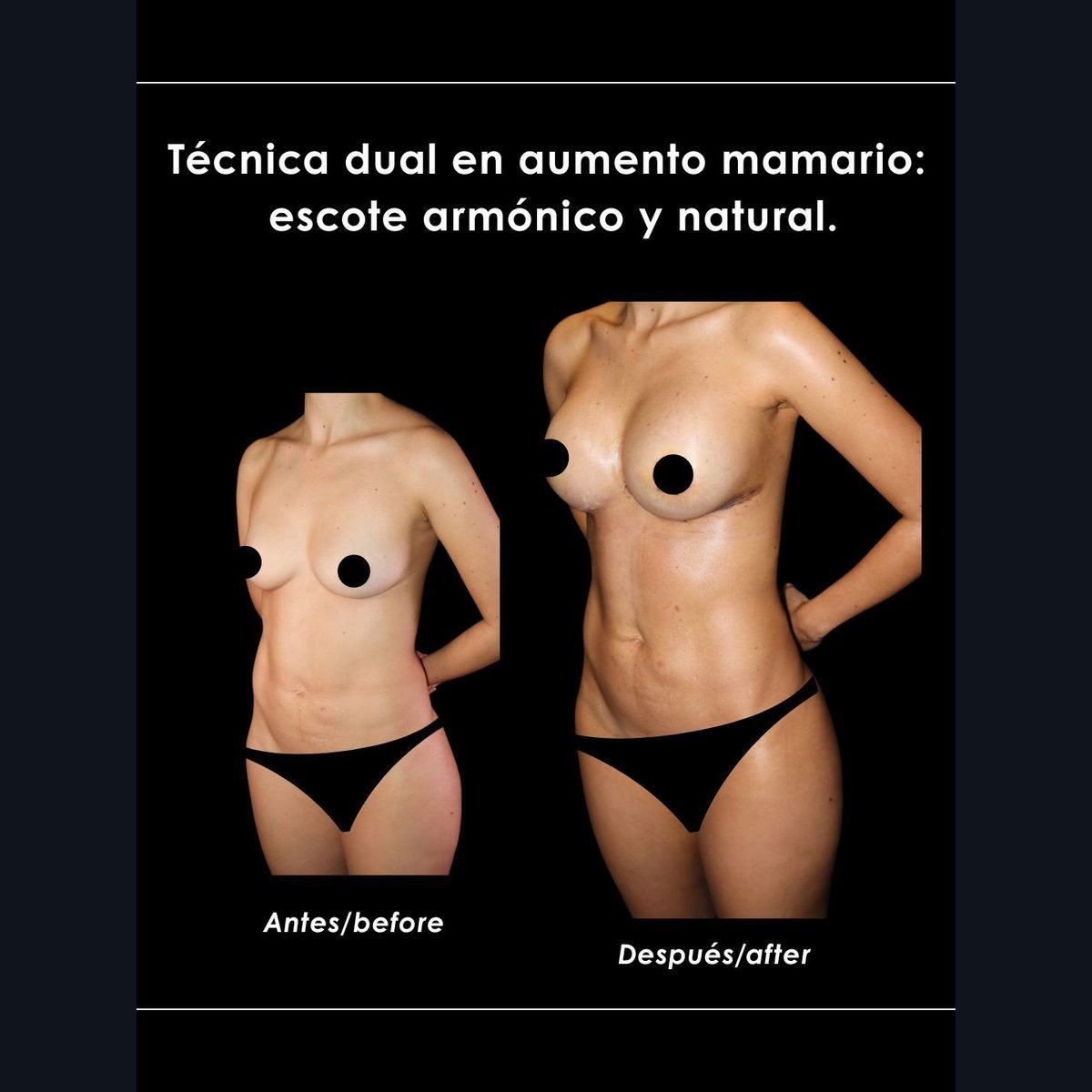
A real case operated on by Dr. Daniel Ramos. Every patient is different: results vary with anatomy, tissue, skin and each person's recovery.
Everything about breast augmentation in Colombia
It depends on the technique, the implant and whether anything else is part of the plan. A minimally invasive augmentation, a dual plane augmentation with a larger implant and an augmentation combined with a lift are three different operations with three different numbers. The implant brand, surface and profile matter too — Dr. Ramos works mainly with Motiva, Mentor and GC Aesthetics —, as do the accredited facility and anesthesia. After your consultation, Dr. Ramos gives you an all-inclusive quote: surgical fee, facility, anesthesia, implants, supplies, post-surgical bra and first-year follow-up. For the real total of the trip, add flights and seven to ten days of accommodation in Bogotá. Be wary of any fixed price given over WhatsApp before someone has measured your chest — it almost always leaves something out.
Preservé is a tissue-preserving approach to breast augmentation. Instead of dissecting the implant pocket with electrocautery, the tissue is separated with a channel instrument and a balloon that inflates gradually, creating a precise space in front of the pectoral muscle without cutting it. The incision in the breast fold is shorter — around three centimeters — and recovery is usually faster. Mia is a related minimally invasive technique designed for small-to-moderate volume increases. Dr. Ramos is trained in both. Neither is right for everyone: both require enough soft tissue to cover the implant, and that is something measured at the consultation, not chosen from a brochure.
It depends on how much tissue you have to cover the implant. In front of the muscle — the plane used by tissue-preserving techniques — the implant moves naturally with your body, does not distort when you flex your chest, and recovery is less painful; but it needs enough soft-tissue coverage for the implant edge not to show. When tissue is thin, a dual plane augmentation places the upper part of the implant behind the pectoral muscle and gains coverage exactly where it is needed most. This is not an aesthetic preference: it follows from measuring the thickness of your tissue in the upper breast.
By measurement, not by catalogue cc. The starting point is the width of your breast base: an implant wider than your base falls outside your proportions, however reasonable the volume sounds. Then come the thickness of the tissue that will cover it and your skin elasticity, which decide how much volume your breast can hold without distorting or dropping over the years. Within that safe range there is room for your preference — more subtle or more noticeable — and Dr. Ramos will show you how much margin you have. If the size you have in mind falls outside that range, he will tell you, with the measurements in hand.
The first three to five days bring the most chest tightness and the most limits on arm movement. For a conventional augmentation Dr. Ramos works with seven days back to daily activities and twenty-one days back to exercise; with tissue-preserving techniques the return to daily life is usually faster still. The post-surgical bra is worn day and night for four to six weeks. Walking from day one is part of recovery; exercise resumes progressively from week three, starting with legs and light cardio and leaving chest and arms for last. Plan on seven to ten days in Bogotá: you fly home after your post-operative review, and follow-up continues by video. The final shape settles between three and six months, once the implant has dropped and the upper breast softens.
In most cases, yes. When the incision is in the breast fold and the implant sits behind the gland, the ducts and breast tissue — which are what breastfeeding needs — are not cut. No surgery can guarantee it one hundred percent, because the ability to breastfeed also depends on factors that exist before surgery. If you plan a pregnancy in the near term, discuss it at your consultation: pregnancy and breastfeeding change breast volume and shape, and sometimes it makes more sense to operate afterwards.
No — and anyone who tells you otherwise is oversimplifying the surgery. The FDA states that breast implants are not lifetime devices. They have no fixed expiry date: they are not replaced on a schedule, but when a complication arises or your body changes. What is recommended is imaging surveillance — ultrasound or MRI five to six years after surgery, then every two to three years — to detect a silent rupture. With good follow-up many patients keep their implants for many years; but it is wise to go into surgery knowing a future exchange is possible.
It is when you choose the surgeon and the facility with the same standards you would use at home. Dr. Ramos is board-certified by the Colombian Society of Plastic Surgery (SCCP), and breast augmentation is performed in accredited surgical facilities in Bogotá, always with a certified anesthesiologist, complete pre-operative labs and breast imaging beforehand. Implants carry Colombian INVIMA sanitary registration and a traceability card identifying your device — keep it for your doctors at home. At the consultation you will also go over the uncommon risks every patient should know, including capsular contracture and breast implant-associated anaplastic large cell lymphoma (BIA-ALCL), which is linked mainly to textured-surface implants.
Let's design your proportions
Tell us your goal and we'll come back with an honest, personalized plan. In-person consultations in Bogotá and video consultations worldwide, in English and Spanish.